Claude Opus 5.5 and GPT-6 Sol and Luna land an hour apart, and a price war begins
Anthropic released Claude Opus 5.5 on September 22, the first model in a new Claude 5.5 family. Anthropic says it performs at the level of Claude Fable 5.1 for most tasks and costs about 40% less to run than Opus 5 on typical workloads. Token prices fell 20% to $4 input and $20 output per million, cache reads fell 60% to $0.20, and output is more than 30% faster. It is now the default in Claude Code and the Claude app, at medium effort. Because Anthropic rates its biology and cybersecurity abilities on par with Claude Mythos 5.1, it carries the same safeguards as Fable 5.1. Sonnet 5.5 and Haiku 5.5 are due to follow.
About an hour later OpenAI launched GPT-6 Sol and GPT-6 Luna at half the price of their GPT-5.6 equivalents: Sol at $2/$10 and Luna at $0.10/$0.50 per million tokens. Terra, the middle tier, is gone, and cached input now gets a 90% discount. OpenAI pitches them on price rather than capability: on FrontierCode, Sol scored 49.3% at $2.14 per task against Fable 5.1's 50.3% at $12.83. The Decoder notes that independent analyses show little gain in actual intelligence over the previous generation.
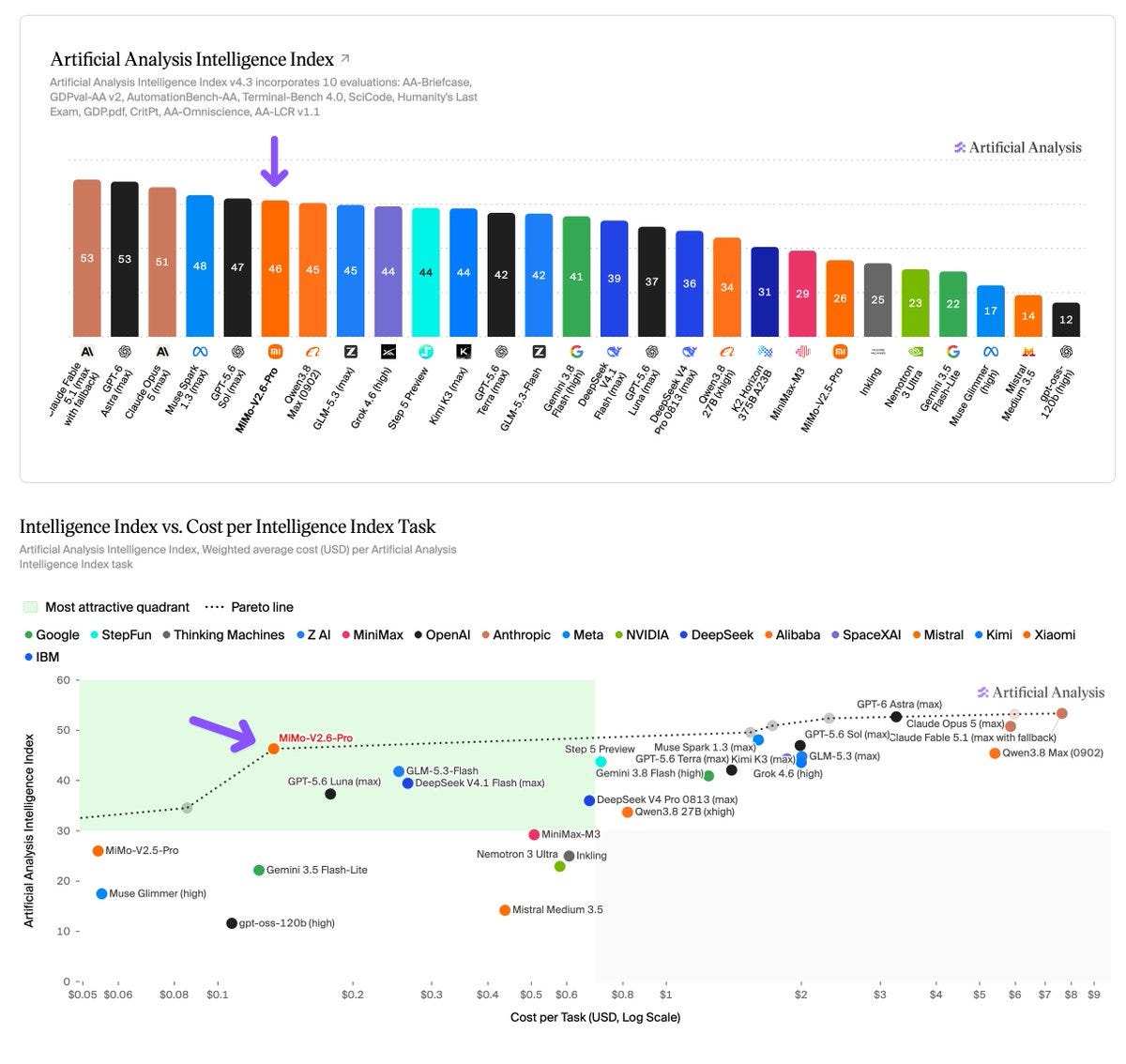
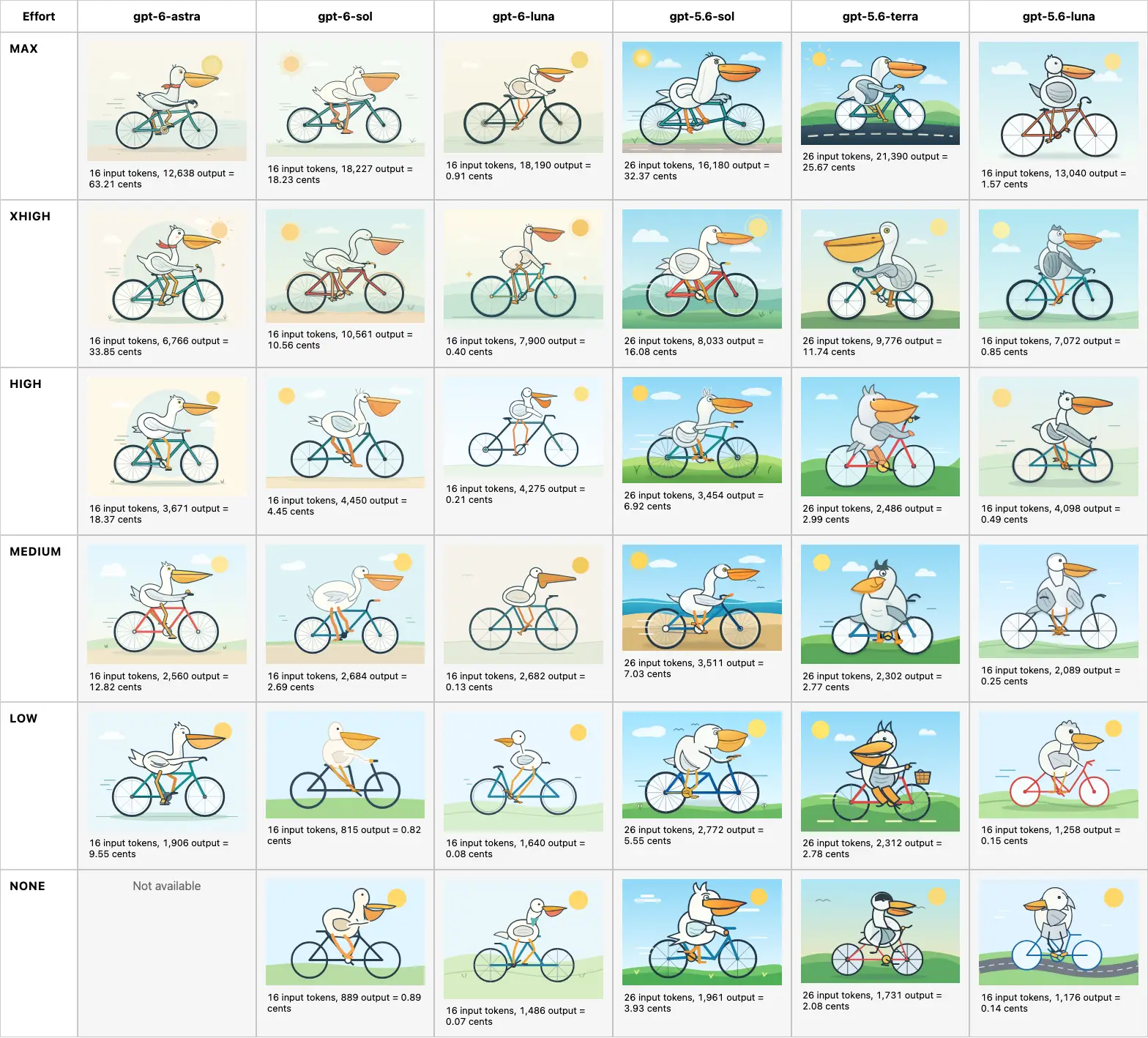
Both launches are about efficiency, not new frontiers, as Ars Technica puts it: enterprise customers have been routing work to cheaper open-weight models. Artificial Analysis found that Opus 5.5 at max effort costs $5.98 per Intelligence Index task, almost the same as Opus 5, because it uses more tokens. Anthropic also stressed writing quality, and Latent Space moved its AINews digest to Opus 5.5 for that reason. Simon Willison had a different experience: at max effort, Opus 5.5 thought so long about his pelican-on-a-bicycle test that it never returned an answer.
Merged from Simon Willison, Latent Space, The Decoder, Ars Technica and InfoQ.